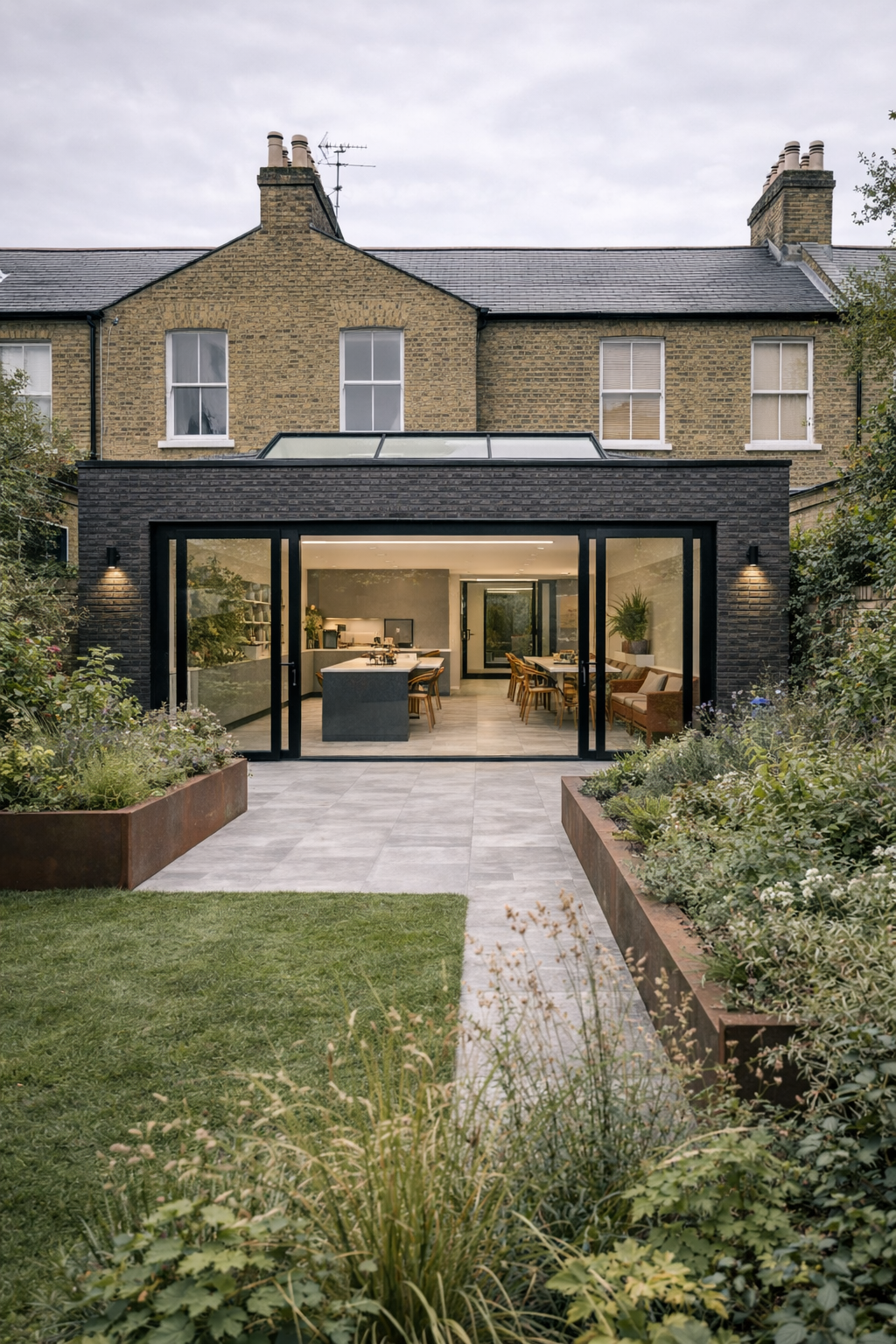
Building Regulations for Home Extensions: The Essential Checklist
One of the most common misconceptions we encounter is homeowners confusing planning permission with building regulations. They're two entirely separate systems. Planning permission controls what you can build and how it looks from the outside. Building regulations control how it's built; ensuring it's structurally safe, energy-efficient, accessible, and fire-safe. Even if your extension falls under permitted development and doesn't need planning permission, it will still need to comply with building regulations. There are no exceptions.
What building regulations cover
Building regulations in England and Wales are set out in a series of Approved Documents (Parts A through S). For a typical home extension, the most relevant parts are:
- Part A (Structure); ensuring the extension is structurally sound, foundations are adequate, and any new or altered structural elements are designed by a qualified engineer.
- Part B (Fire Safety); fire detection (smoke alarms), escape routes, fire resistance of structural elements, and fire separation between the extension and any adjoining property.
- Part C (Site Preparation and Resistance to Contaminants and Moisture); damp-proofing, drainage, and protection against ground contaminants.
- Part E (Resistance to Sound); particularly relevant for loft conversions and party walls.
- Part F (Ventilation); adequate ventilation for habitable rooms, kitchens, and bathrooms.
- Part G (Sanitation); hot and cold water supply, bathroom installations.
- Part K (Protection from Falling); balustrades, staircases, level changes.
- Part L (Conservation of Fuel and Power); thermal insulation, U-values for walls/roof/floor/glazing, airtightness.
- Part M (Access); accessible entrances, suitable facilities.
- Part P (Electrical Safety); all new electrical work must be certified.
| Part | Covers | Key Requirement |
|---|---|---|
| Part A | Structure | Foundations and structural elements designed by a qualified engineer |
| Part B | Fire Safety | Smoke alarms, escape routes, fire-resistant materials |
| Part L | Energy Efficiency | Walls ≤0.18 U-value, roofs ≤0.15, windows ≤1.4 |
| Part E | Sound | Sound insulation between new and existing rooms |
| Part F | Ventilation | Adequate ventilation in all habitable rooms |
| Part K | Falls | Balustrades, staircase dimensions, level changes |
| Part P | Electrics | All new electrical work must be certified |
Part L: energy efficiency requirements
Part L is one of the most impactful regulations for extensions and was significantly updated in 2023. The current requirements set maximum U-values (a measure of thermal performance) for each element of the extension: walls must achieve a U-value of 0.18 W/m²K or better, floors 0.18, roofs 0.15, and windows/doors 1.4 (or 1.2 for rooflights). In practice, this means thicker insulation, higher-performance glazing, and careful attention to thermal bridging at junctions. Your architect and structural engineer will design the build-up to meet these standards, and Building Control will check compliance during construction.
Building Control vs Approved Inspectors
You have two options for building regulations compliance: your local authority's Building Control department, or a private Approved Inspector. Local authority Building Control is the traditional route; you submit plans for approval and they carry out inspections during the build. An Approved Inspector is a private company that performs the same function. Both are equally valid and result in the same legal compliance. Private inspectors are often more responsive and flexible on timing, but local authority Building Control has the advantage of being the "official" record holder and can be contacted directly by future buyers' solicitors.
Inspections during the build
Building Control (or your Approved Inspector) will want to inspect the works at key stages. Typical inspection points for an extension include: commencement, foundations (before concrete is poured), damp-proof course, drainage, structural steelwork, pre-plaster (checking insulation, fire stopping, ventilation), and final inspection. Your builder should notify Building Control at each stage and not cover up any work before it's been inspected. Failure to arrange inspections can result in opening-up work later, which is expensive and disruptive.
The completion certificate
Once all works are finished and the final inspection has been carried out, Building Control will issue a completion certificate. This document confirms that the extension complies with building regulations. It is absolutely essential that you obtain this certificate. Without it, you may face serious problems when selling your property; most mortgage lenders and conveyancing solicitors require evidence of building regulations compliance for any structural work. If a completion certificate was never issued, you may need to apply for a regularisation certificate (which involves a retrospective assessment and higher fees) or take out indemnity insurance. Neither option is as clean as getting the certificate at the right time.
Never skip the Building Control completion certificate. Without it, selling your property can become extremely difficult; conveyancing solicitors will flag the absence, and mortgage lenders may refuse to lend. If you have already completed works without one, apply for a regularisation certificate as soon as possible. The longer you leave it, the harder (and more expensive) it becomes.
Building regulations may not be the most glamorous aspect of your extension project, but they're arguably the most important. They ensure your new space is safe, warm, and legally compliant; and getting them right from the start saves time, money, and stress down the line.
Ready to start your project?
Whether you're planning an extension, loft conversion, or full renovation, our team can guide you from first sketch to completion.