How Much Does a Home Extension Really Cost in 2026?
"How much will it cost?" is the first question every homeowner asks, and the honest answer is always "it depends." But that's not particularly helpful when you're trying to set a realistic budget. In this guide, we'll break down the real costs of home extensions in 2026; including the professional fees and hidden expenses that catch so many people off guard.
Cost per square metre: London vs the rest of the UK
Construction costs in the UK vary significantly by region, and London commands a premium. In 2026, expect to pay between £2,200 and £3,500 per square metre for a well-specified single-storey extension in London. Outside the capital, the range sits between £1,500 and £2,800 per sqm. These figures include the building work itself; foundations, structure, roofing, glazing, electrics, plumbing, and plastering; but they don't include the kitchen, bathroom fittings, flooring, or decorations.
Single-storey extension costs
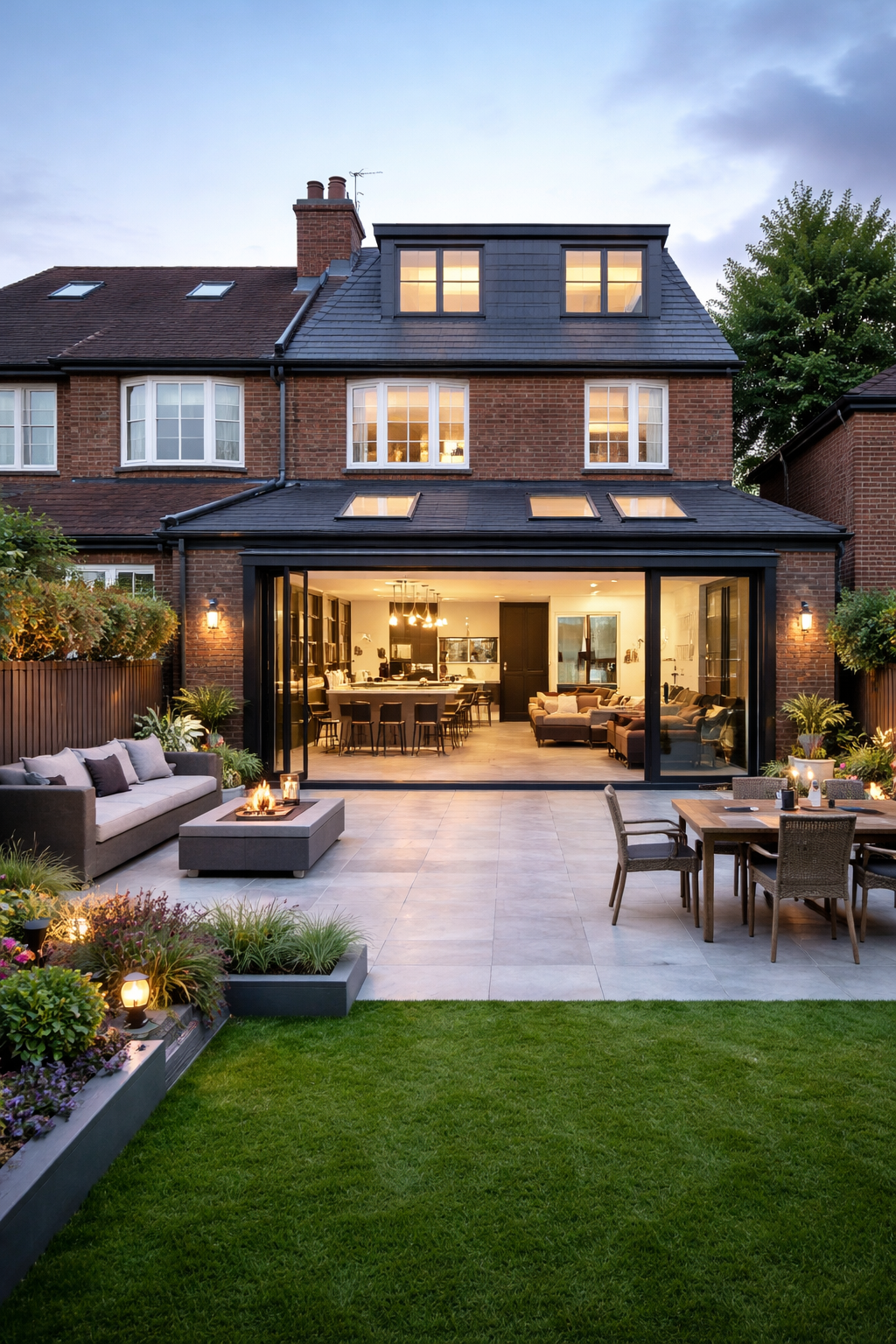
A typical single-storey rear extension in London covers 15–25 square metres and costs between £45,000 and £85,000 for the build alone. The size depends on your permitted development allowance and how much garden you're willing to sacrifice. A more modest 3-metre extension on a terraced house might come in at £40,000–£55,000, while a larger 6-metre extension with premium glazing and high-end finishes can push past £100,000. The biggest cost driver is the specification: standard aluminium bi-fold doors are significantly cheaper than slim-frame steel-look systems, and a polycarbonate rooflight costs a fraction of a walk-on glass roof.
Double-storey extension costs
Here's where the value equation gets interesting. A double-storey extension doesn't cost twice as much as a single-storey; typically it's around 50–65% more. That's because the most expensive elements (foundations, roof, and groundworks) are shared. In London, a two-storey rear extension of around 30–40 sqm total costs between £80,000 and £140,000. You get both additional ground-floor living space and an extra bedroom or bathroom upstairs, making the cost per square metre significantly lower than a single-storey build.
Loft conversion costs
Loft conversions remain one of the most cost-effective ways to add space because you're building within the existing roof envelope. A basic Velux (rooflight) conversion starts at around £30,000–£40,000, though these are only suitable where existing headroom is generous. A rear dormer conversion; the most popular choice for London homes; typically costs £45,000–£65,000. For a full mansard conversion (new roof profile on both slopes), expect to pay £60,000–£85,000. L-shaped loft conversions, which extend over the rear addition of a Victorian property, sit at the top end at £70,000–£100,000.
Kitchen extension costs
When people say "kitchen extension," they usually mean an open-plan kitchen-diner created by extending the rear of the house. The build itself might cost £50,000–£80,000, but the total project cost is often much higher once you factor in the kitchen. A decent mid-range kitchen with appliances costs £15,000–£25,000, while a premium kitchen from brands like Roundhouse, Harvey Jones, or a bespoke joiner can easily add £30,000–£50,000 or more. Integrated appliances, boiling water taps, wine fridges, and underfloor heating all push the budget higher.
| Extension Type | Typical Cost (London) | Typical Cost (UK) |
|---|---|---|
| Single-storey rear | £45,000–£85,000 | £30,000–£60,000 |
| Double-storey | £80,000–£140,000 | £55,000–£100,000 |
| Loft dormer | £45,000–£65,000 | £35,000–£50,000 |
| Loft mansard | £60,000–£90,000 | £45,000–£70,000 |
| Side return | £30,000–£60,000 | £20,000–£40,000 |
| Wraparound | £70,000–£120,000 | £50,000–£90,000 |
Hidden costs that catch homeowners out
The build cost is only part of the picture. Professional fees and ancillary costs can add 15–25% to the total budget. These are the items that regularly surprise first-time extenders:
- Architectural design fees: £3,000–£8,000 (or 8–12% of build cost)
- Structural engineer: £1,500–£3,500
- Party wall surveyor: £700–£1,500 per neighbour
- Building control fees: £500–£1,200
- Planning application fee: £258 (householder application in England)
- Thames Water build-over agreement: £0–£500
- Kitchen and appliances: £10,000–£50,000+
- Flooring throughout: £2,000–£8,000
- Decoration: £1,500–£4,000
- Landscaping and making good the garden: £2,000–£10,000
- Skip hire and waste removal: £1,000–£3,000
- Temporary accommodation (if needed): £2,000–£8,000
Tips for managing your extension budget
- Always include a 10–15% contingency on top of the quoted build cost.
- Get at least three competitive quotes from reputable builders; not the cheapest and not the most expensive.
- Fix the specification before you tender to avoid costly variations during the build.
- Consider building in winter when contractors are less busy and may offer better rates; though groundworks in waterlogged soil can slow things down.
- Don't skimp on the architect. Good design avoids expensive mistakes and maximises value for every pound spent.
- Phase the work if budget is tight; build the extension now, fit the premium kitchen later.
Always include a 10–15% contingency on top of the quoted build cost. On a £70,000 project that means setting aside £7,000–£10,500 for unforeseen issues; and in our experience, you will use some or all of it. Contingency is not optional; it is essential.
Regional cost differences across the UK
London and the South East are the most expensive regions for construction, driven by higher labour costs and property values. In the Midlands, the North of England, Wales, and Scotland, you can typically expect to pay 20–35% less per square metre for the same quality of build. For example, a single-storey extension that costs £70,000 in south London might cost £45,000–£55,000 in Manchester or Birmingham. However, the value added by the extension may also be proportionally lower, as property values differ. The key metric is always cost versus value uplift; your architect can advise on what makes financial sense for your area.
Ready to start your project?
Whether you're planning an extension, loft conversion, or full renovation, our team can guide you from first sketch to completion.