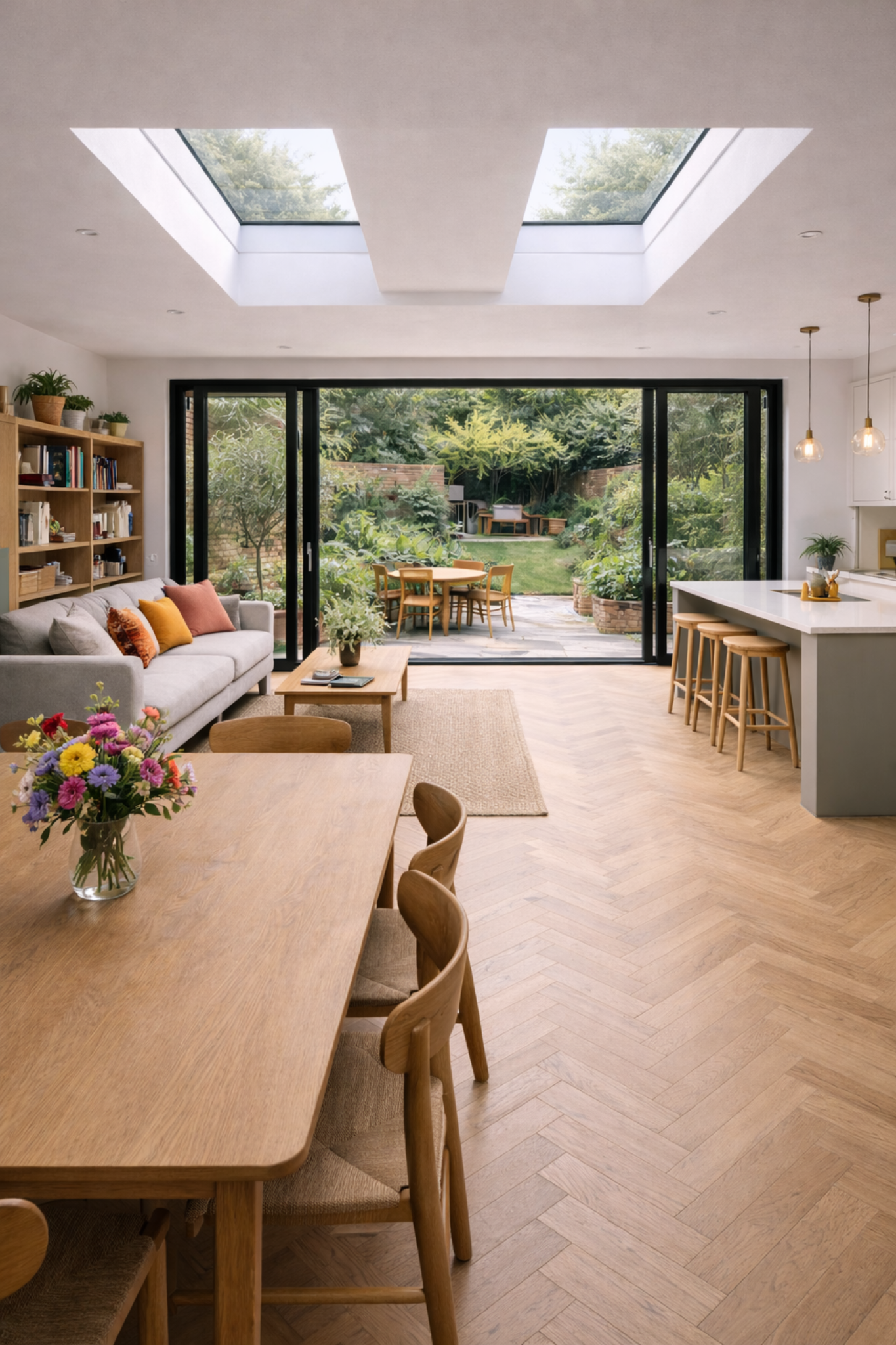
How Long Does a Home Extension Take From Start to Finish?
"How long is this going to take?" is the question that comes right after "How much will it cost?"; and the answer is equally nuanced. A home extension is not just a building project; it's a design, planning, procurement, and construction process with multiple stages, each with its own timeline. The total duration from initial briefing to completion typically ranges from 6 to 12 months, depending on the complexity of the project and whether planning permission is required.
| Phase | Duration | Key Activities |
|---|---|---|
| Design | 4–8 weeks | Survey, brief, concept design, structural input |
| Planning (if needed) | 8 weeks | Submit application, neighbour consultation, decision |
| Technical design | 3–4 weeks | Construction drawings, building regs submission |
| Party wall (if needed) | 8–12 weeks | Serve notice, surveyor appointment, award |
| Tender & procurement | 2–4 weeks | Builder quotes, selection, contract |
| Construction | 8–16 weeks | Build on site through to handover |
| Snagging | 1–2 weeks | Final fixes and finishing touches |
The design phase: 4–8 weeks
The first stage involves appointing an architect, surveying your property, and developing the design. The architect will visit your home, measure the existing building, discuss your brief and budget, and then produce initial design options. You'll typically see two or three layout concepts before settling on a preferred scheme. The design is then developed in more detail with input from a structural engineer. This phase usually takes 4–8 weeks, depending on the complexity of the design and how quickly decisions are made. The most common cause of delay at this stage is indecision; every week spent debating kitchen layouts is a week added to the programme.
Planning permission: 8 weeks (if needed)
If your extension requires planning permission, the application takes 8 weeks from validation to decision (this is the statutory determination period for householder applications). In practice, most councils hit this target, though some boroughs with heavy caseloads may take a few weeks longer. If your project falls under permitted development, you can skip this stage entirely; though you should still apply for a Lawful Development Certificate (6–8 weeks). Pre-application advice, if sought, adds another 4–6 weeks before the main application but can significantly improve your chances of approval.
Tender and procurement: 2–4 weeks
Once you have detailed construction drawings and any necessary approvals, the project is sent to builders for pricing. This is called "going to tender." Your architect will typically invite three to four contractors to quote, giving them 2–3 weeks to price the job. You then compare the quotes, meet your preferred builder, and agree terms. Allow 2–4 weeks for this process. It's worth noting that good builders are busy builders; you may need to wait 4–8 weeks for your preferred contractor to start, especially if you're building in the spring or summer months.
Construction: 8–16 weeks
The build itself is the most visible stage, but it's not always the longest. A straightforward single-storey rear extension typically takes 10–14 weeks. A side return infill takes 8–12 weeks. A loft conversion takes 8–12 weeks. A double-storey extension takes 14–20 weeks. A wraparound extension takes 12–16 weeks. These timelines assume no significant unforeseen issues; which brings us to the topic of delays.
Common causes of delay
- Weather; particularly heavy rain during foundations and groundworks. Winter builds are prone to this.
- Structural surprises; discovering unexpected conditions below ground (old drains, tree roots, poor soil) can add time to the foundation stage.
- Material lead times; bespoke items like structural glass rooflights, steel beams, and bi-fold doors often have 6–10 week lead times. Order early.
- Design changes during construction; changing your mind mid-build is the single biggest cause of delays and cost overruns.
- Building Control queries; if the inspector isn't satisfied, work must stop until the issue is resolved.
- Party wall delays; if your neighbour is slow to respond, the party wall process can hold up the start date.
The most common cause of delay is not the build itself; it is indecision during the design phase and late changes during construction. Make all key decisions (kitchen, flooring, tiles, sanitaryware) before your builder starts on site. Every week of delay during construction costs you money and extends the disruption to your daily life.
Tips for staying on schedule
- Make all design decisions before construction starts; kitchen, flooring, tiles, sanitaryware, lighting.
- Order long-lead items as soon as the design is finalised, not when they're needed on site.
- Start the party wall process in parallel with the design phase.
- Choose a builder based on reliability and references, not just price.
- Agree a realistic programme with your contractor and hold them to it with regular progress meetings.
- Build in a 2-week buffer at the end of the programme for snagging and finishing touches.
Ready to start your project?
Whether you're planning an extension, loft conversion, or full renovation, our team can guide you from first sketch to completion.