Permitted Development Rights Explained: What You Can Build Without Planning
Permitted development (PD) rights are one of the most misunderstood aspects of home improvement in the UK. Many homeowners don't realise how much they can build without ever submitting a planning application; and equally, many assume they have PD rights when they've actually been removed. This guide explains the rules clearly so you know exactly where you stand.
What is permitted development?
Permitted development rights are a national grant of planning permission that allows certain building works to be carried out without needing to apply to your local council. They're set out in the Town and Country Planning (General Permitted Development) (England) Order 2015 (as amended), and they apply to most houses in England. The key word is "houses"; flats, maisonettes, and commercial properties generally don't benefit from PD rights. The rules differ in Scotland, Wales, and Northern Ireland, so always check the specific legislation for your area.
Class A: Rear extensions
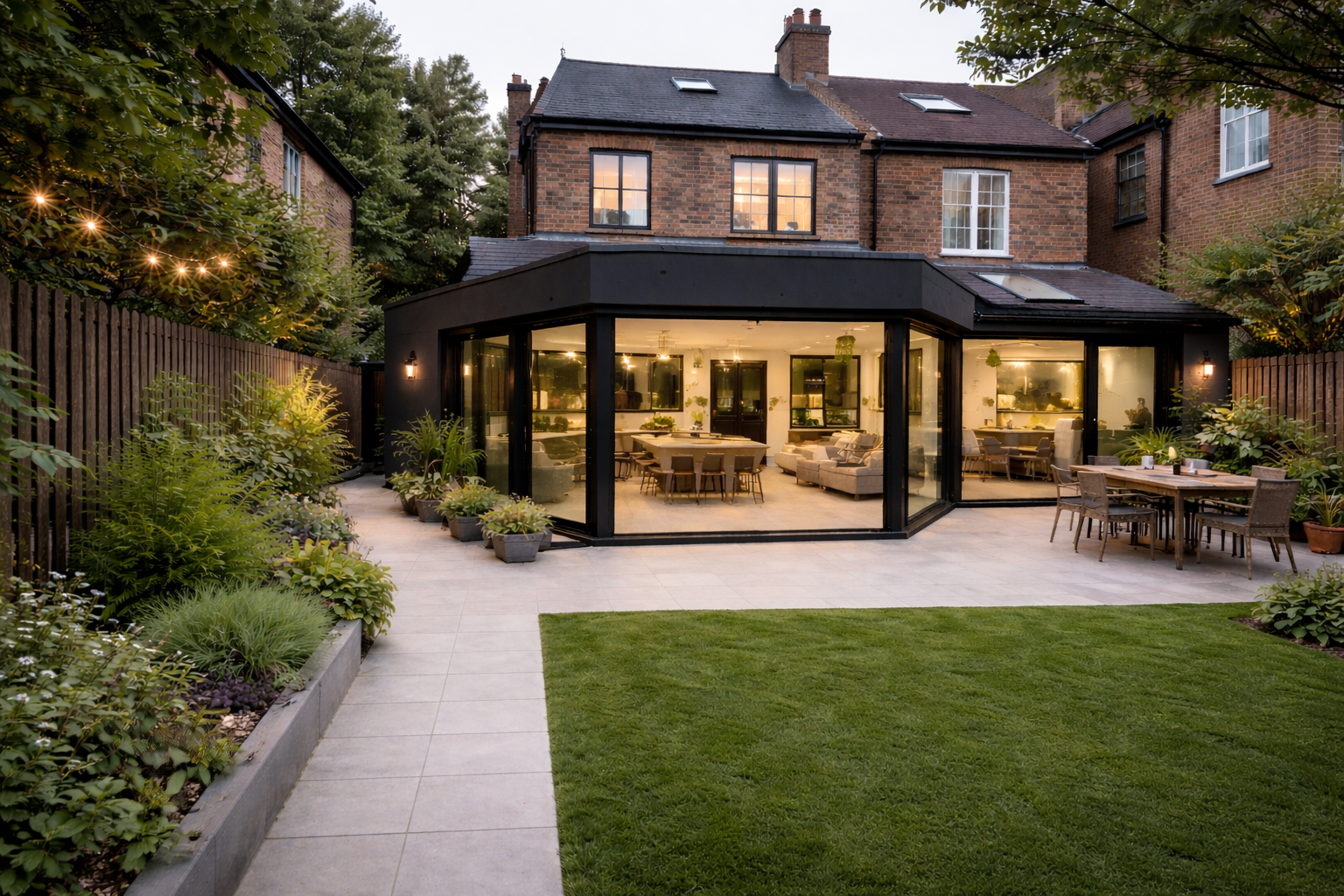
Class A covers single-storey rear extensions, which are the most common type of home extension. The key limits are: detached houses can extend up to 4 metres from the rear wall (or 8 metres under the prior notification scheme); semi-detached and terraced houses can extend up to 3 metres (or 6 metres under prior notification). The extension must not exceed 4 metres in height, and the eaves height must match the existing house. The extension cannot cover more than 50% of the curtilage (the land around the original house, excluding the original house footprint). Materials should be similar in appearance to the existing house.
| Extension Type | Max Depth (Detached) | Max Depth (Semi/Terraced) |
|---|---|---|
| Single-storey rear (standard PD) | 4 metres | 3 metres |
| Single-storey rear (prior notification) | 8 metres | 6 metres |
| Max height | 4 metres | 4 metres |
| Roof (dormer) volume | 50 cubic metres | 40 cubic metres |
| Outbuilding max height (within 2m of boundary) | 2.5 metres | 2.5 metres |
Class B and C: Roof extensions (loft conversions)
Class B covers additions to the roof of a house; essentially, dormer loft conversions. The volume allowance is 40 cubic metres for terraced houses and 50 cubic metres for detached and semi-detached houses. The dormer must not extend beyond the plane of the existing roof slope facing the highway (i.e., no front dormers under PD). Materials must be similar in appearance to the existing house. The extension cannot increase the height of the existing roof. Side-facing windows must be obscure-glazed and non-opening unless the opening part is more than 1.7 metres above floor level.
Class E: Outbuildings
Class E allows outbuildings such as garden offices, gyms, studios, and workshops. The building must be single storey with a maximum eaves height of 2.5 metres and an overall height of 4 metres (dual pitched) or 3 metres (any other roof). If within 2 metres of the boundary, the maximum overall height is 2.5 metres. Outbuildings cannot cover more than 50% of the curtilage and must not be used as self-contained living accommodation (no separate dwelling). These rules make garden offices and studios perfectly achievable under PD, provided you stay within the size limits.
When permitted development does not apply
Several situations remove or restrict PD rights. It's essential to check these before assuming you can build without planning:
- Flats and maisonettes have no PD rights for extensions.
- Listed buildings require listed building consent for any alterations, internal or external.
- Conservation areas have additional restrictions; no side extensions, no cladding, and rear extensions may be limited.
- Article 4 directions can remove specific PD rights in certain areas; common in historic town centres and some London boroughs.
- Properties that have already been extended may have used up their PD allowance.
- New-build estates often have PD rights removed as a condition of the original planning permission.
Before assuming you have permitted development rights, check whether your property is subject to an Article 4 direction. These are imposed by local councils to remove specific PD rights in certain areas; they are particularly common in conservation areas and some London boroughs. Your local planning authority's website will confirm whether an Article 4 direction applies to your property.
Getting a Lawful Development Certificate
Even if your project falls within PD, we always recommend applying for a Lawful Development Certificate (LDC) from your local council. This is a formal confirmation that your proposed works are lawful and don't require planning permission. It costs £115 for a householder application and typically takes 6–8 weeks to process. Having an LDC provides certainty, avoids enforcement issues, and is invaluable when you come to sell; conveyancing solicitors always ask for evidence that building works were carried out lawfully. Think of it as an insurance policy that costs very little relative to the total project.
If you're unsure whether your project falls under permitted development, speak to an architect or planning consultant before starting work. Getting it wrong can be expensive; councils have the power to issue enforcement notices requiring unauthorised works to be demolished at the homeowner's expense.
Ready to start your project?
Whether you're planning an extension, loft conversion, or full renovation, our team can guide you from first sketch to completion.