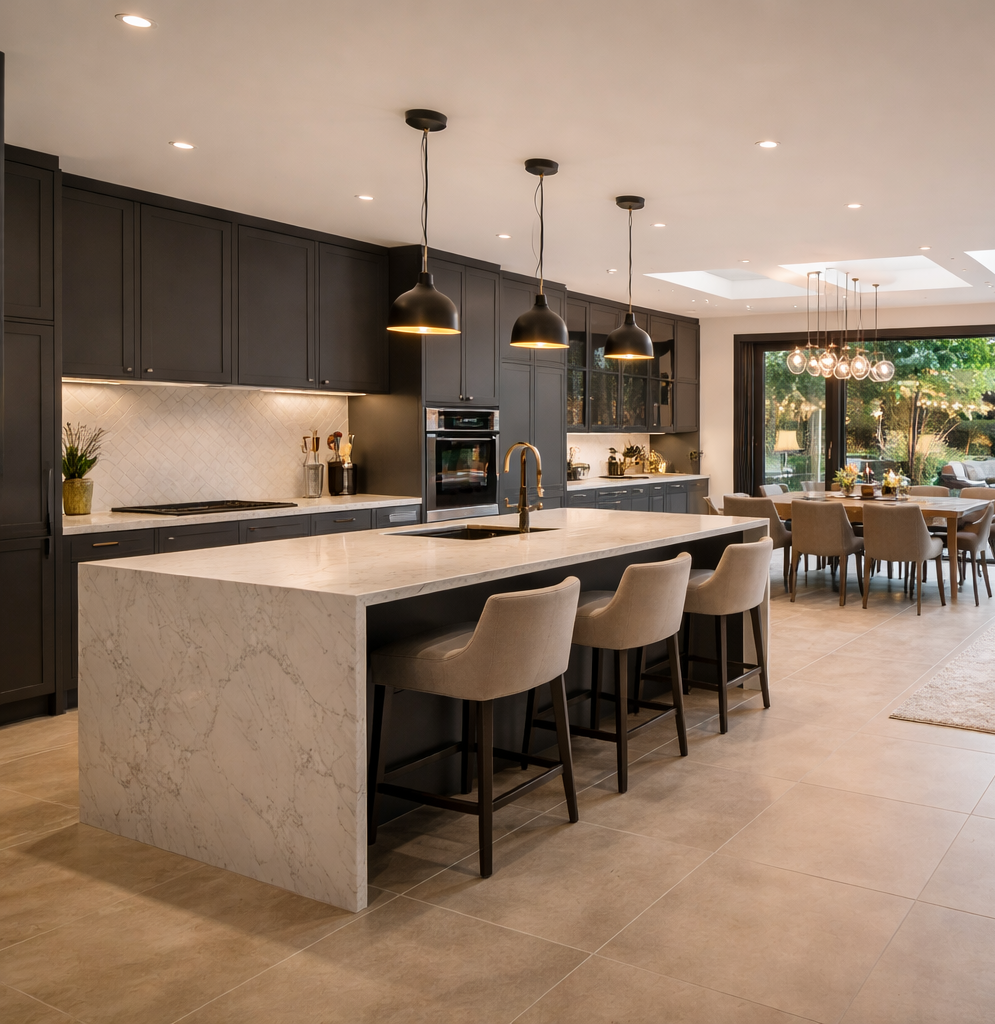
Single-Storey vs Double-Storey Extensions: Which Adds More Value?
One of the most common questions we're asked is whether it's better to build a single-storey or double-storey extension. The answer depends on what you need, your budget, and how the extension interacts with your property's planning constraints. But from a pure value-for-money perspective, the numbers often favour going to two storeys; if you can get permission.
Cost comparison: single vs double
Here's the key insight: a double-storey extension does not cost double. The most expensive elements of any extension; foundations, groundworks, and the roof; are shared between both floors. Adding a second storey typically increases the total build cost by 50–65%, not 100%. In London terms, a single-storey rear extension of 20 sqm might cost £60,000–£80,000. The same footprint as a double storey (40 sqm total) would cost £95,000–£130,000. That's roughly £2,400–£3,250 per sqm for the double storey compared to £3,000–£4,000 per sqm for the single; meaning you get significantly more space for each pound spent.
| Factor | Single Storey | Double Storey |
|---|---|---|
| Typical cost (London, 20 sqm footprint) | £60,000–£80,000 | £95,000–£130,000 |
| Total space added | ~20 sqm | ~40 sqm |
| Cost per sqm | £3,000–£4,000 | £2,400–£3,250 |
| Value added to property | 5–10% | 10–20% |
| Planning permission | Often PD | Almost always required |
| Build duration | 10–14 weeks | 14–20 weeks |
| Disruption level | Moderate | Higher |
Value added: what the numbers say
A well-designed single-storey extension typically adds 5–10% to a property's value, while a double-storey extension can add 10–20%. The second floor usually provides an additional bedroom and bathroom; two of the most value-adding elements in any home. Estate agents consistently report that the jump from a three-bedroom to a four-bedroom house produces a disproportionate increase in value, often more than the cost of the works. If your property currently has three bedrooms and you can add a fourth plus an en-suite, the return on investment is likely to be strong.
Planning implications
This is where the two options diverge significantly. Single-storey rear extensions often fall within permitted development rights, meaning no planning application is required. Double-storey rear extensions almost always require planning permission, as they exceed PD limits in most cases. The planning process adds 8–12 weeks and introduces uncertainty; there's no guarantee of approval. Overlooking, loss of light, and overshadowing to neighbouring properties are the most common reasons for refusal. Your architect should assess the planning risk early in the process and advise on the likelihood of success before you invest in detailed design work.
Disruption and timeline
A single-storey extension typically takes 10–14 weeks to build. A double-storey extension takes 14–20 weeks. The first-floor works add complexity; scaffolding, additional structural elements, more finishes, a staircase extension in some cases; and the longer build means more disruption if you're living in the house. However, the disruption per square metre is actually lower for a double storey, since the groundworks phase (the most disruptive part) is the same duration for both.
When single storey makes more sense
- You primarily need ground-floor living space (kitchen-diner, family room) and already have enough bedrooms.
- Your property is in a conservation area or has other planning constraints that make a two-storey extension unlikely to be approved.
- Neighbouring properties haven't set a precedent for double-storey extensions, making refusal more likely.
- Budget is tight and you want to stay within a lower cost range.
- You want to proceed under permitted development to avoid the time and uncertainty of a planning application.
When double storey makes more sense
- You need both additional ground-floor living space and extra bedrooms/bathrooms upstairs.
- The property has good planning potential; neighbours have built similar extensions, and there are no significant overlooking issues.
- You want to maximise the return on investment from the project.
- You plan to stay in the property long-term and want to future-proof the accommodation.
- The cost premium for the second storey is within your budget and the value uplift justifies the spend.
ROI analysis
For a typical London property valued at £600,000, a single-storey extension costing £70,000 that adds 7% in value generates a value uplift of £42,000; a net cost of £28,000 for your new space. A double-storey extension costing £110,000 that adds 15% generates a value uplift of £90,000; a net cost of just £20,000, and you've gained twice the space. The double storey wins on almost every financial metric, provided planning permission is achievable. The caveat is that these are general figures; your architect and a local estate agent can provide more specific advice for your property and area.
The cost per square metre drops significantly when you go from single to double storey. Shared foundations and roof structure mean the second floor adds just 50–65% to the total cost; not 100%. If you need both ground-floor living space and extra bedrooms, a double-storey extension almost always offers better value per pound spent.
Ready to start your project?
Whether you're planning an extension, loft conversion, or full renovation, our team can guide you from first sketch to completion.