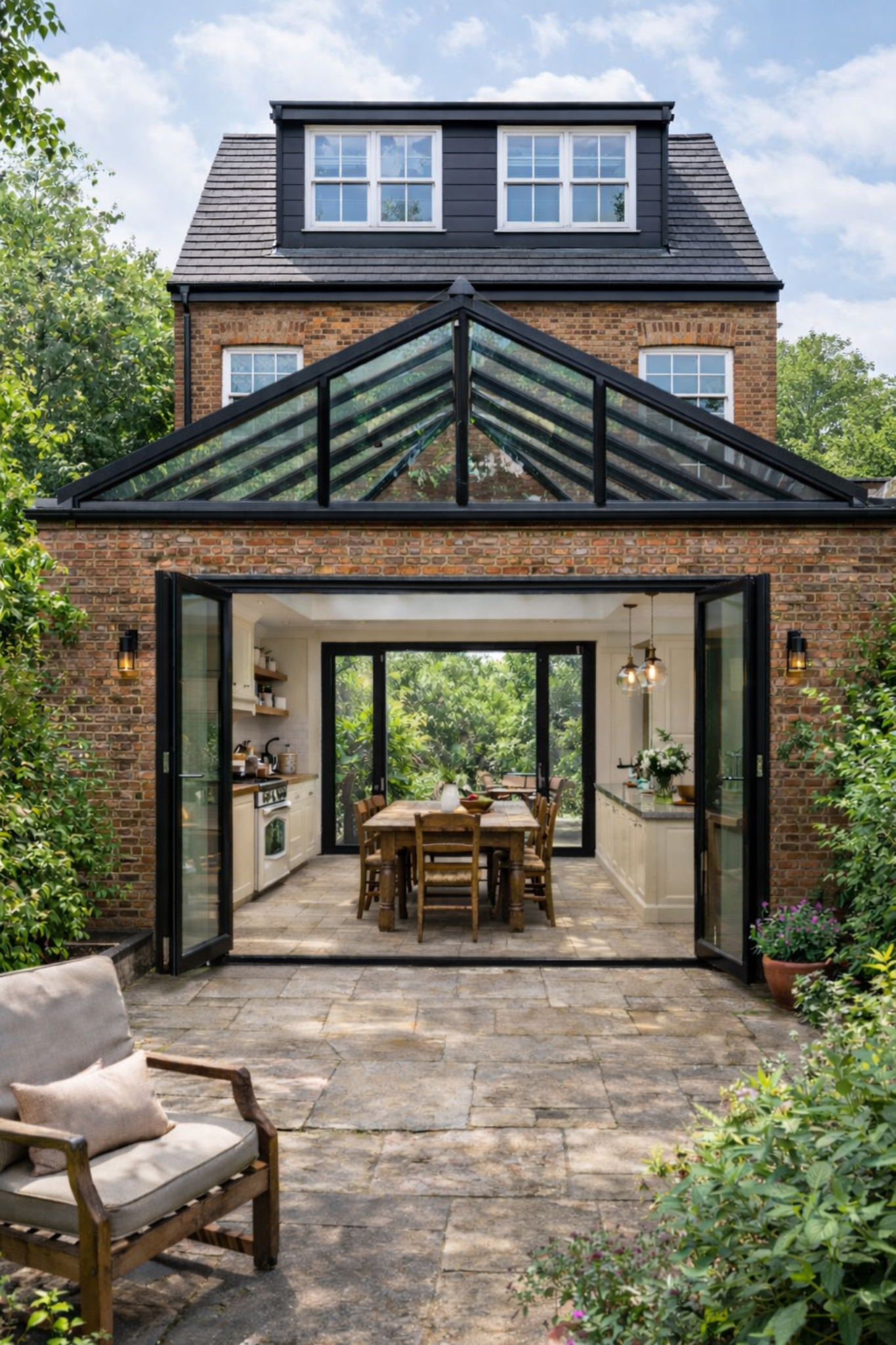
Sustainable Home Extensions: Eco-Friendly Design for 2026
Sustainability is no longer a nice-to-have in building design; it's a regulatory requirement and, increasingly, a financial imperative. The 2023 update to Part L of the Building Regulations raised the bar significantly for thermal performance in new extensions, and the direction of travel is clear: buildings need to be warmer, more airtight, and less reliant on fossil fuels. The good news is that building sustainably doesn't have to mean building expensively. Many of the most impactful measures are cost-neutral or pay for themselves within a few years through reduced energy bills.
Part L: what the 2023 changes mean for your extension
The 2023 update to Part L (Conservation of Fuel and Power) introduced significantly stricter U-value targets for new building elements. Walls must achieve 0.18 W/m²K, roofs 0.15, floors 0.18, and windows 1.4 (rooflights 1.2). In practice, this means thicker insulation throughout; typically 100mm+ of PIR (polyisosocyanurate) board in walls and floors, and 150mm+ in roofs. The airtightness standard has also been tightened, requiring better detailing at junctions and around penetrations. These requirements apply to all new extensions, regardless of size, and represent a meaningful improvement in the thermal performance of UK homes.
The 2025 Future Homes Standard is expected to tighten Part L requirements further, with the aim of making all new homes and extensions "zero carbon ready." If you are planning an extension in 2026, designing to exceed current Part L targets is a smart move; it future-proofs your build and reduces running costs from day one.
Insulation options: SIPs, PIR, and beyond
PIR board (brands like Celotex and Kingspan) is the workhorse of extension insulation; lightweight, high-performance, and relatively affordable. For higher performance, consider Structural Insulated Panels (SIPs), which combine insulation and structure in a single prefabricated panel. SIPs extensions can be erected quickly and achieve exceptional thermal performance with minimal cold bridging. Natural insulation materials; sheep's wool, wood fibre, hemp; are growing in popularity for their low embodied carbon and moisture-handling properties, though they're generally thicker and more expensive than synthetic alternatives.
| Insulation Type | Typical U-value | Thickness Needed (walls) | Relative Cost |
|---|---|---|---|
| PIR board (Celotex/Kingspan) | 0.18 W/m²K | 100–120mm | £ |
| SIPs (Structural Insulated Panels) | 0.15 W/m²K | 120–140mm | ££ |
| Wood fibre | 0.18 W/m²K | 160–200mm | ££ |
| Sheep's wool | 0.18 W/m²K | 150–180mm | ££–£££ |
| Mineral wool | 0.18 W/m²K | 140–170mm | £ |
| Aerogel blanket | 0.15 W/m²K | 40–60mm | £££ |
Triple glazing: is it worth it?
Triple glazing achieves U-values of 0.7–0.9 W/m²K, compared to 1.2–1.4 for standard double glazing. The cost premium is typically 15–25% over high-quality double glazing. Whether it's "worth it" depends on the extent of glazing in your extension; if you have a large glass wall with bi-fold doors, triple glazing will make a noticeable difference to comfort and energy bills. For a standard extension with a few windows, the payback period is longer and the comfort improvement less dramatic. Our advice: always triple-glaze rooflights (they're the weakest thermal link in most flat-roofed extensions), and consider triple glazing for large door openings.
Heat pumps and your extension
An extension can be a catalyst for upgrading your whole-house heating system. Air source heat pumps (ASHPs) are now a proven, mainstream technology in the UK, with the Boiler Upgrade Scheme offering a £7,500 grant towards installation costs. A well-insulated extension with underfloor heating is perfectly suited to a heat pump, as the low flow temperatures (35–45°C vs 60–70°C for a gas boiler) work efficiently with UFH's large surface area. If you're considering a heat pump, design the extension's heating system around it from the outset; retrofitting later is more expensive and less efficient.
Green roofs and living walls
A flat-roofed extension is an excellent candidate for a green roof; a layer of growing medium and drought-resistant plants (typically sedum) installed on top of the waterproof membrane. Green roofs provide thermal insulation, manage rainwater runoff (reducing flood risk), support biodiversity, and look beautiful from upper-floor windows. A basic sedum green roof adds approximately £80–£120 per square metre to the cost. Living walls (vertical planting on external walls) are more complex and expensive but can be a striking design feature. In London, some boroughs actively encourage green roofs through planning policy, and they can support Urban Greening Factor requirements.
Sustainable materials
- Cross-laminated timber (CLT); a structural timber panel system with very low embodied carbon compared to steel and concrete. Increasingly used for domestic extensions.
- Recycled steel; structural steel can be sourced from recycled stock with no loss of performance.
- Lime mortar; more breathable than cement mortar and better suited to older properties.
- FSC-certified timber; ensures the wood comes from responsibly managed forests.
- Recycled aggregates; for foundations and groundworks, reducing demand for virgin quarried materials.
- Low-carbon concrete; newer mixes using ground granulated blast furnace slag (GGBS) or fly ash reduce the carbon footprint of concrete by 30–50%.
Reducing embodied carbon
Embodied carbon; the CO₂ emitted during manufacturing, transport, and construction of building materials; accounts for a significant proportion of a building's total carbon footprint. The simplest way to reduce it is to build less: design efficiently, avoid overspecification, and reuse existing materials where possible. Retaining the existing foundations, brickwork, or roof structure rather than demolishing and rebuilding saves both carbon and money. When specifying new materials, choose local suppliers to reduce transport emissions, and favour timber over steel and concrete where structurally appropriate.
Long-term energy savings
A well-insulated, airtight extension with efficient heating and LED lighting can actually reduce your overall energy bills, even though you've added floor area. This sounds counterintuitive, but the new space is built to much higher thermal standards than the existing house, and the works often involve improving the thermal performance of adjacent rooms too. With energy prices in the UK remaining high, the financial case for building sustainably has never been stronger. A 20% improvement in whole-house thermal performance could save £400–£800 per year on energy bills; a meaningful return on the modest additional investment in better insulation and glazing.
Ready to start your project?
Whether you're planning an extension, loft conversion, or full renovation, our team can guide you from first sketch to completion.