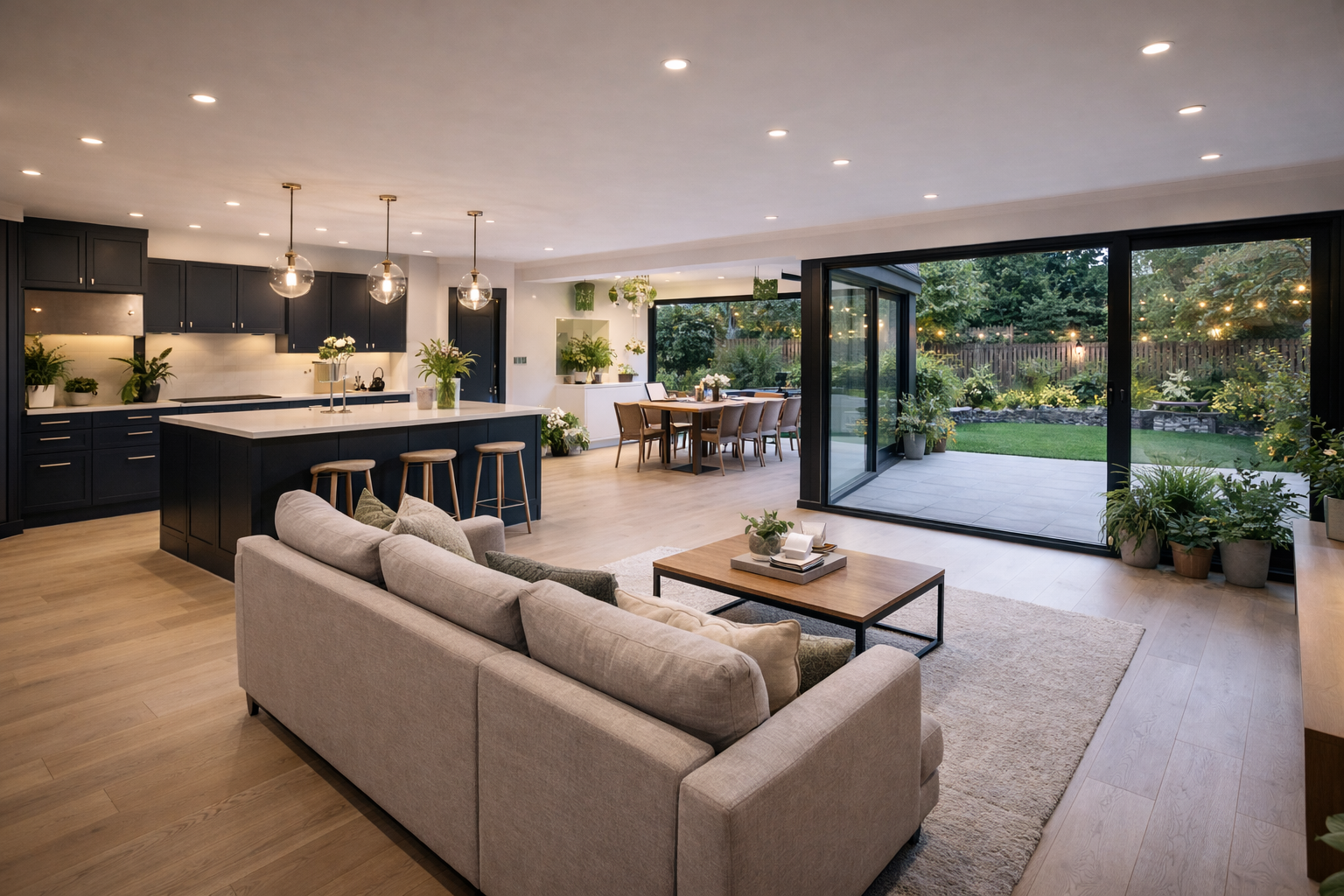
Wraparound Extensions: Combining Rear and Side for Maximum Impact
A wraparound extension is exactly what it sounds like: a single extension that wraps around the rear and side of your house in an L-shape, combining the benefits of a rear extension and a side return infill in one project. It's the most ambitious single-storey extension option and delivers the most dramatic increase in ground-floor space. For London homeowners who want a truly transformative kitchen, dining, and living area, a wraparound is often the ultimate goal.
L-shaped vs full wraparound
Most wraparound extensions are L-shaped; the extension covers the rear of the property and one side return. A true full wraparound (covering the rear and both sides) is only possible on detached or end-of-terrace properties. The L-shaped layout is by far the most common in London, where mid-terrace and end-terrace houses typically have a side return on one side only. The beauty of the L-shape is that it creates a large, continuous open-plan space while maintaining a courtyard feel where the two arms of the L meet; an ideal spot for a rooflight that floods the interior with natural light.
Structural steel requirements
A wraparound extension involves significant structural work. Removing the existing rear wall of the house and the side wall of the rear addition requires substantial steel beams (RSJs) to carry the loads above. Where the two beams meet at the internal corner, a steel column or padstone is typically required to transfer the loads to the ground. This corner detail needs careful design by a structural engineer; it's the most complex structural junction in the whole project. The steelwork in a wraparound extension can weigh 500kg–1,000kg in total and usually requires crane access for delivery and installation.
The internal corner where the rear and side beams meet is the most structurally critical point in a wraparound extension. A steel column or reinforced padstone must transfer loads from both beams to the foundations. This junction needs careful design by a structural engineer; get it wrong and you risk cracking, deflection, or worse. Never skip the structural engineer on a wraparound project.
Planning considerations
While the side return element of a wraparound often falls within permitted development, the rear extension component must also comply with PD limits. The combined footprint means that you're more likely to exceed the 50% curtilage coverage rule, and the overall scale of the works may attract more scrutiny from the planning authority. In many cases, a householder planning application is the safest route, even if individual elements might technically fall within PD. Your architect should assess this early and advise on the most appropriate approach. A pre-application discussion with the council can also be invaluable for wraparound projects.
Cost of a wraparound extension
A wraparound extension in London typically costs between £70,000 and £120,000 for the build alone, depending on the size, specification, and site constraints. The premium over a simple rear extension reflects the additional structural steel, the more complex roof design (often incorporating multiple rooflights), the larger floor area, and the greater extent of enabling works (demolition, drainage diversion, boundary treatment). When you add a kitchen (£15,000–£40,000), flooring (£3,000–£8,000), and professional fees (£8,000–£15,000), the total project cost is typically £100,000–£175,000.
| Cost Element | Typical Range |
|---|---|
| Build cost (shell & finishes) | £70,000–£120,000 |
| Structural steelwork | £4,000–£8,000 |
| Glass rooflights | £8,000–£20,000 |
| Kitchen & appliances | £15,000–£40,000 |
| Flooring | £3,000–£8,000 |
| Professional fees (architect, engineer, party wall) | £8,000–£15,000 |
| Total project cost | £100,000–£175,000 |
Design tips for maximising light
- Use a large structural glass rooflight over the junction of the L; this is the darkest spot and benefits most from overhead light.
- Full-height glazing at the rear (bi-fold or sliding doors) connects the space to the garden and maximises south-facing light.
- Consider a glass side panel alongside the rear doors to bring light into the deeper part of the extension.
- Light-coloured flooring and white or pale walls reflect light deeper into the plan.
- Avoid dark-coloured kitchen units on the side return wall; opt for lighter tones to prevent that area feeling like a cave.
- If the side return is narrow, a continuous glass roof along its length creates a dramatic ribbon of light.
Is a wraparound right for your home?
A wraparound extension is best suited to Victorian and Edwardian terraced or end-of-terrace houses with a clear side return passage of at least 900mm width. The property should ideally have a garden of sufficient depth to absorb the rear extension without feeling cramped. If your garden is very short (less than 8 metres), a wraparound may leave too little outdoor space. The ideal candidate is a property where both the rear and the side return are underperforming; a narrow kitchen, a wasted side passage, and a poor connection to the garden. A wraparound addresses all three issues in one project, making it the most cost-effective approach when you need the maximum ground-floor transformation.
Ready to start your project?
Whether you're planning an extension, loft conversion, or full renovation, our team can guide you from first sketch to completion.